
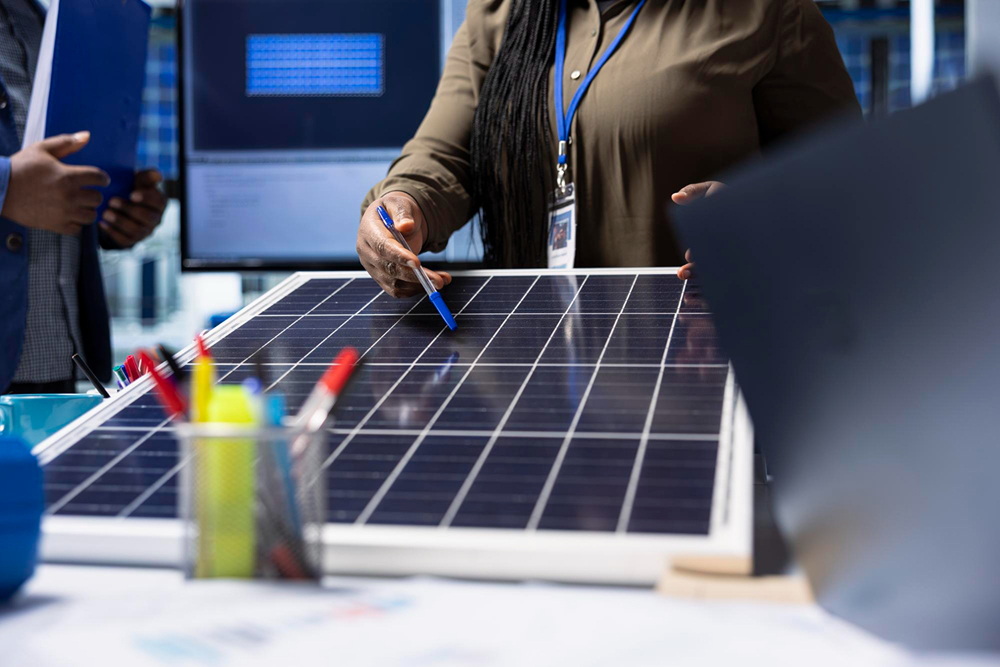
Solar installations lower grid dependency by supplementing supply. But they do not teach your restaurant, retail chain, or office block to use less . A poorly managed HVAC system, oversized lighting load, or inefficient kitchen equipment will continue wasting kilowatt-hours whether powered by Eskom or the sun.
Energy efficiency , by contrast, addresses consumption behavior and systems design. It is about understanding where and how energy is being used—and wasted. This is achieved through monitoring, analytics, and operational changes such as:
- Optimizing HVAC schedules
- Replacing inefficient refrigeration or lighting
- Training staff to reduce standby and idle loads
- Correcting oversized equipment or poor tariff allocation
Only once these inefficiencies are addressed does solar become a true cost- and carbon-reduction tool. Otherwise, businesses are simply “solarising waste.”
You Cannot Solarise Inefficiencies: Why Energy Efficiency Must Precede Solar
Across South Africa, solar installations are rapidly becoming the “go-to” solution for rising energy costs and unreliable supply. The narrative is simple: put panels on the roof, reduce Eskom dependency, and save money. While there is truth in this, the perception that solar alone will “solve” energy challenges is misleading.
The reality is clear: solar reduces grid cost exposure but does not inherently reduce energy consumption . Without first addressing inefficiencies in how a building or facility consumes energy, solar merely masks underlying problems. This is why Energy Performance Certificates (EPCs), as mandated and recommended by SANEDI, are critical.
Why EPCs Matter
An Energy Performance Certificate (EPC) provides a benchmark of how efficiently a building consumes energy relative to its size and function. Much like a nutritional label, it highlights inefficiencies in black and white, creating a baseline for improvement.
SANEDI’s framework ensures:
- A standardized, comparable measure of building performance
- Transparency for landlords, tenants, and investors
- A roadmap for energy-saving interventions before capital-intensive solar installations
By first improving an EPC rating through efficiency measures, businesses maximise the return on solar because the system size required is smaller, and savings are genuine, not illusory.
A Simple Analogy
Imagine filling a leaky bucket with expensive bottled water. You could pour endlessly and always be short, or you could fix the leaks first. Solar is the bottled water. Energy efficiency is fixing the leaks.
The Smart Path Forward
- Measure first – Deploy monitoring to establish real consumption patterns.
- Diagnose inefficiencies – Use EPCs to highlight waste and poor practices.
- Implement changes – From low-cost behavioral shifts to capital projects like LED retrofits.
- Right-size solar – Only after efficiency gains should you invest in renewables.
Conclusion
Solar is a powerful tool for resilience and cost management, but it is not a silver bullet. Businesses must resist the temptation to “install panels and forget” while inefficiencies persist. An EPC-driven strategy ensures you don’t just shift costs—you reduce them.
In energy, as in health, prevention is better than cure. You cannot solarise inefficiencies.
KeyPoints: A shorter version
You Cannot Solarise Inefficiencies
Across South Africa, solar is often seen as the “fix-all” for rising costs and load shedding. Put panels on the roof and the problem disappears, right? Not quite.
- 👉 Solar reduces grid cost exposure , but it does not reduce consumption .
- 👉 A building with poor HVAC control, oversized lighting, or inefficient refrigeration will still waste kilowatt-hours — whether powered by Eskom or the sun.
This is where Energy Performance Certificates (EPCs) , as recommended by SANEDI , come in. An EPC is like a health check for your building. It benchmarks efficiency, highlights waste, and shows where real savings can be made.
💡 Efficiency first, solar second.
Fix the leaks in the bucket before filling it with expensive water.
The smart path forward:
- 1️⃣ Measure consumption patterns
- 2️⃣ Identify inefficiencies (via EPCs)
- 3️⃣ Implement efficiency changes
- 4️⃣ Right-size your solar
Solar is powerful. But without efficiency, you’re just solarising waste
.
🌍 In energy — as in health — prevention is better than cure.